
I laughed when my teacher told me that bacteria have an immune system. It sounded ridiculous. Bacteria are teeny-tiny beings. They do not have brain, body, and blood. How could something so small possibly have an immune system? Right? No.
This incident happened during my bachelor’s degree. One of my teachers mentioned in the class that even these tiny beings have an immune system. Obviously, not as sophisticated as ours, but an immune system nonetheless. I looked at him and said, “You cannot just say anything and expect us to believe it.” (yeah, I used to be that blunt 🙈) Then he told us that he had worked on this system during his master’s thesis.
What???
I was shockeddddd.
As he explained more, it began to make sense. And the more I learned about them, the more interesting the story became.
So, to begin with, we need to understand what exactly is an immune system?
When we hear the words “immune system”, we always think of complicated things happening in our body to protect us from flu. We are partially right. Instead, we can think of it as a combination of all the things we have that stops pathogens from entering our body and fights them if they get inside.
The simplest example is our skin. It acts as a physical shield between our body and the outside world. In a way, we all are Captain America with our skin as our shield against pathogens. Our mouth has saliva, which traps and stop germs from sticking to our mouth. In addition to these, we have many specialized cells deep inside our body to destroy pathogens if they manage to get inside. All this happens in a much more complicated way, perhaps a story for another day. 😉
The main idea is simple: an immune system is a system of protection.
And, if we think about it carefully, every living thing, whether tiny or big, simple or complex, must protect itself to survive. So, everybody has their own version of immune system. Some have the latest version, while some are still managing with older versions.
Now, bacteria having an immune system no longer seems so strange. Isn’t it?
Obviously, they cannot defend themselves in the same way we do, but they have developed their own methods. And, most importantly, they need these methods because they also get infections. Yes, another surprising fact for today.
Bacteria can get viral infections. (viruses don’t spare anyone)
To survive in this dangerous microscopic world, bacteria have…
drum-rolls please 🥁
CRISPR-Cas.
We all have heard something about CRISPR-Cas: “We did this using CRISPR” or “We did that using CRISPR”. It always seems to be in the news. And let me tell you, it's worthy of all the limelight it gets. It has a god-level power. Not one with a hammer, but one with a pair of scissors.
First of all, it has a very scary full form: “Clustered Regularly Interspaced Short Palindromic Repeats.” 😮💨 Good news is we don't need to remember it to understand what it does. Hurray! 🎊
CRISPR-Cas works like a combination of a photo album and scissors.
When certain bacteria survive a viral attack, they cut a tiny piece of the virus’s DNA and store in the photo album. This photo album (CRISPR) is a special section in bacteria’s own DNA, where all the previous terrorists’s photos are stored.
In future, if the same kind of virus returns, bacteria uses the photo album to recognize it. Then a protein called Cas(actual scissors of this system) cuts the virus’s DNA into pieces and stop the attack.
It’s simple yet highly effective.

The discovery of CRISPR is also very interesting.
In 1987, scientists studying bacterial DNA noticed unusual DNA sequences (pages of photo albums), which did not seem to belong to bacteria. At first, nobody knew what these strange sequences were doing in bacteria. Years later (2008–2010), researchers discovered that many of the mysterious pieces matched DNA from viruses. They realized that bacteria were storing records of previous viral infections. They were not meaningless, rather they were part of a defense system (bacteria’s immune system).
Later, researchers learned how to put custom (DNA) photos in that photo album. Emmanuelle Charpentier and Jennifer Doudna got noble prize in Chemistry for this. 👏🏽
Today, we can cut any DNA sequence with these scissors (Cas proteins) and study many genetics diseases and explore possible medical treatments. It has now become a tool that allows us to edit DNA. We have now the power of god in the palm of our hands. (Spider-man’s Dr. Octopus reference for those who didn’t understand this 🙈)
I once found it impossible to believe that bacteria could have anything resembling immunity. But now the idea does not seem strange. What do you think? Btw, my teacher worked on one of such scissors (cas proteins) in his masters thesis. _🫡_
So, what did we learn today about bacteria?
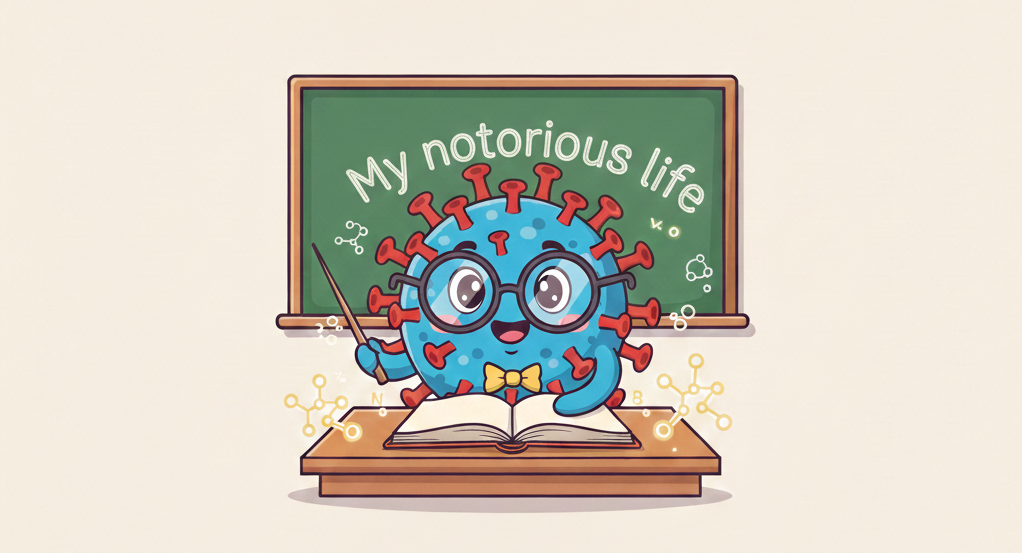
They are not weak or helpless little cells. Think of them as tiny warriors, armed with molecular scissors and genetic photo albums, fighting invisible battles.
Lastly, I think everyone has a hidden talent. Even bacteria — which are already hidden — have hidden talents of their own. Bye!
If you enjoyed this piece, you can find more of my stories, book recommendations, and creative updates on kamalshokeen.com. And join me on my journey to get new posts and recommendations delivered straight to you. 😇🪷
Comments